Top 10 Best Lead Thyroid Shield Suppliers Worldwide
Choosing among the Best Lead Thyroid Shield Suppliers requires more than comparing prices, lead equivalence, or product photographs. Radiation protection depends on fit, material quality, ergonomic design, cleaning procedures, and verified performance. A thyroid collar should sit closely beneath the jaw without restricting breathing or movement. Small gaps can reduce practical protection during repeated fluoroscopy, dental imaging, or radiographic procedures.
Professional guidance supports a risk-based approach. The International Atomic Energy Agency’s Safety Standards, including GSR Part 3, emphasizes justification and optimization of medical exposures. NCRP Report No. 168 also highlights the importance of structured radiation safety programs in medical imaging. However, protective apparel should not replace equipment shielding, correct positioning, exposure optimization, or staff training. Recommendations may differ by procedure, patient age, and national policy. The market is not perfectly comparable.
This guide examines ten international suppliers through a practical and evidence-aware lens. It considers declared lead equivalence, quality documentation, manufacturing experience, customization, inspection records, and after-sales support. Suppliers with ISO 13485 certification or other relevant quality systems may offer stronger traceability, but certification alone is not proof of superior protection. Buyers should request current test reports, material specifications, warranty terms, and cleaning instructions. Some supplier websites remain vague. That is a weakness worth noting. Reliable purchasing requires independent verification, not attractive claims. The strongest candidates combine technical transparency with usable designs for radiologists, dentists, technicians, and patients. Safety performance must remain the central measure.
What a Lead Thyroid Shield Is and How It Protects the Thyroid
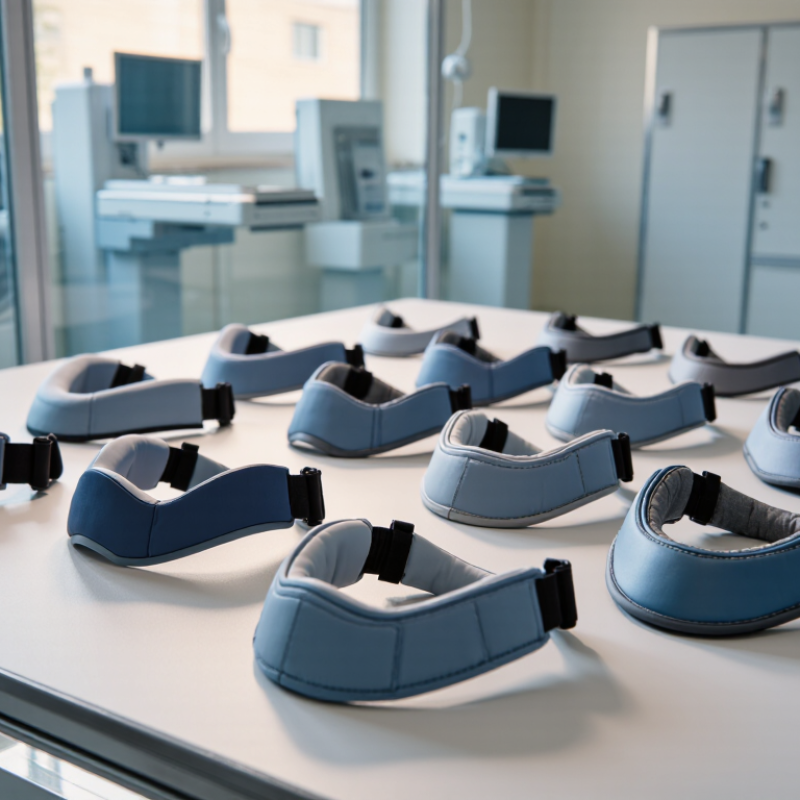
A lead thyroid shield is a flexible collar containing lead or lead-equivalent material. It covers the lower neck during selected X-ray procedures. Its purpose is to reduce scattered radiation reaching the thyroid gland. The thyroid is radiosensitive, especially in younger patients. However, the shield is not a universal solution. It cannot replace correct positioning, exposure settings, or trained clinical judgment.
NCRP Report 160 estimated that medical imaging contributed about 3.0 mSv per person annually in the United States during 2006. The report also identified computed tomography as a major contributor. ICRP Publication 103 assigns the thyroid a tissue-weighting factor of 0.04, confirming its importance in radiation-risk assessment. Protection depends on fit, coverage, and material performance. A commonly specified product value is 0.5 mm lead equivalence, but higher thickness does not always mean better protection. It may increase weight and restrict movement. Supplier reviews should examine independent testing, durability, cleaning instructions, sizing, and certification documents. Marketing claims deserve verification.
Tips: Choose a collar that fits closely without touching the airway. Keep it outside the primary imaging field. Always follow the facility’s radiation-safety protocol. A poorly positioned shield can obscure anatomy and trigger repeat imaging, which weakens its intended benefit. That detail is easy to overlook. Supplier quality should be judged by evidence, not appearance.
Lead Thyroid Shield Protection: Theoretical Attenuation by Lead-Equivalent Thickness
Lead thyroid shields reduce exposure by attenuating scattered diagnostic X-rays. The chart shows theoretical attenuation for 100 keV photons using approximate NIST XCOM lead attenuation data and a lead density of 11.34 g/cm³. Actual protection varies with photon energy, beam geometry, fit, and shield condition.
Reference basis: NIST XCOM mass attenuation data for lead; calculated with the Beer–Lambert law. Values are theoretical estimates, not product certification results.
Key Standards for Evaluating Lead Thyroid Shield Suppliers
Selecting among top thyroid shield suppliers requires evidence, not polished catalogs. UNSCEAR’s 2020/2021 assessment estimated about 4.2 billion diagnostic X-ray examinations worldwide. That scale makes repeatable protection important. A reliable supplier should identify tested material, lead-equivalent thickness, test voltage, and pass criteria. “0.5 mm Pb” alone is incomplete. Ask for batch records.
IEC 61331-3:2014 offers a useful reference for protective devices against diagnostic medical X-radiation. Suppliers should provide independent attenuation testing aligned with applicable national requirements. Look for ISO 13485-based quality controls, traceability, dimensional tolerances, and documented factory inspections. The IAEA’s General Safety Requirements Part 3 emphasizes optimization and quality assurance. Product selection should therefore include fit, coverage, and routine inspection. A collar that gaps at the throat may protect less than its label suggests. Fit matters.
Review the actual user environment. Interventional rooms may need flexible, lightweight materials, while dental settings demand easy cleaning and stable positioning. Request samples and inspect seams, closures, cracking, odor, and surface damage after repeated disinfection. Supplier claims should match test reports, not marketing language. Procurement teams should verify replacement schedules and disposal guidance. I may overvalue thickness; field usability can decide real protection. That deserves scrutiny.
Global Overview of the Top 10 Lead Thyroid Shield Suppliers
The global lead thyroid shield market is shaped by hospital demand, dental imaging, and interventional radiology. NCRP Report No. 160 found that medical exposure represented about 48% of the average U.S. population dose in 2006. That figure still influences procurement priorities.
The ten leading supplier groups typically compete through radiation attenuation, fit, and documented quality control. Common products use 0.25, 0.35, or 0.50 mm lead equivalence. IEC 61331-3 testing helps buyers compare protective clothing more consistently. ISO 13485 certification also signals a controlled medical-device quality system, although certification alone cannot prove superior durability.
Look closely at construction.
Strong suppliers provide measured shielding data, seam inspections, size charts, and cleaning instructions. Some offer lightweight composite materials, but weight reduction may affect flexibility and long-term handling. The IAEA promotes optimization under the ALARA principle, making correct positioning as important as material thickness. A collar that gaps at the neck is not fully protective. This practical detail is often overlooked.
Global purchasing also depends on traceability, replacement policies, and regional compliance documentation. Market rankings remain imperfect because shipment volume, private-label production, and independent laboratory results are rarely disclosed together. Buyers should request recent test reports rather than rely on catalog claims. A low purchase price can become expensive when closures fail, sizing is poor, or staff stop wearing the shield.
Supplier Profiles, Product Ranges, and Manufacturing Strengths
Top 10 Best Lead Thyroid Shield Suppliers Worldwide
The strongest suppliers combine clinical experience with disciplined manufacturing systems. Their profiles should show years serving radiology, dental, veterinary, and mobile imaging teams. Reliable suppliers explain lead-equivalent ratings, material composition, sizing, and cleaning instructions clearly. Product ranges may include thyroid collars, adjustable shields, pediatric sizes, and lightweight composite alternatives. Custom colors and closures can improve daily use, but comfort should not replace verified protection.
Manufacturing strength appears in controlled material mixing, accurate thickness, reinforced stitching, and consistent fastening hardware. Look for suppliers using batch testing, dimensional checks, and documented traceability. Independent laboratory reports add credibility, especially when purchasing across borders. Some factories offer private labeling and custom patterns, while others focus on standardized production. Bigger capacity is useful, yet it does not always mean better quality. I would still question vague test claims and unusually low prices.
Tips: Request recent test documents before ordering. Check shield coverage against clinical positioning. Ask how defects are handled. Inspect sample stitching and collar flexibility. A supplier may promise fast delivery, but stock accuracy can be imperfect. Confirm lead times in writing, and review replacement policies before approving a large order.
