How to Choose the Right Armature Shaft?
Choosing the right Armature Shaft is not a simple matter of matching diameter and length. The shaft carries torque, supports the rotor, guides the commutator, and transfers motion through bearings. A small design mistake can create vibration, noise, heat, or premature bearing wear.
Professor Juha Pyrhönen, a respected electric-machine researcher, describes motor design as “a compromise between performance, cost, and reliability.” This principle applies directly to Armature Shaft selection. A shaft may look strong on paper, yet fail under repeated torsional loading. The real test appears at the bearing journals, keyway, and commutator seat.
Measure carefully. Check shaft runout with a dial indicator. Inspect the surface finish where the bearing fits. Even a slight scoring mark can disturb alignment. Consider steel grade, heat treatment, corrosion exposure, operating speed, and the rotor’s balance class. A larger shaft is not automatically safer. It may increase inertia and reduce efficiency.
Experience also matters. Ask how the shaft will behave after thousands of start-stop cycles. Review the actual load, not only the motor’s rated power. This is where specifications can become misleading. They often describe ideal conditions.
The best choice combines calculated strength with practical manufacturing limits. It should resist bending, torsion, fatigue, and thermal stress without unnecessary weight. Still, no selection is perfect. Testing may reveal a weakness that calculations miss. A reliable process therefore includes prototype inspection, dimensional verification, and application-based validation before production approval.
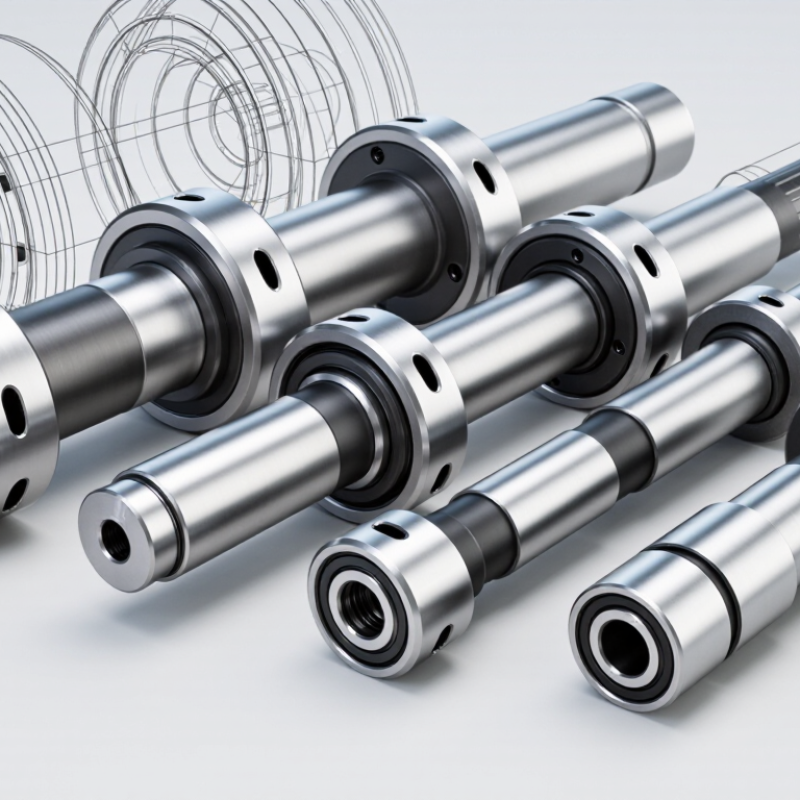
Define the Armature Shaft’s Role in the Motor Assembly
How to Choose the Right Armature Shaft?
Defining the armature shaft’s role is the practical starting point. In a brushed motor, it supports the rotor, commutator, and sometimes a cooling fan. It transfers electromagnetic torque to the driven equipment. The shaft also keeps rotating parts aligned with the bearings. A flexible shaft can create vibration, noise, and uneven brush contact. That small error can reduce motor life.
During inspection, measure the shaft diameter at several points. Differences may reveal wear, bending, or poor machining. Check the bearing seats carefully. They need accurate dimensions and smooth surfaces. Keyways, threads, and shoulders must match the connected components. Surface finish matters near every bearing. I once saw a motor fail early because a shoulder was slightly too sharp. It damaged the bearing seal during assembly. The issue seemed minor. It was not.
Choose the material according to load, speed, and environment. Hardened steel suits demanding torque and repeated cycling. Stainless steel may help where moisture causes corrosion concerns. Consider the rotor weight and the distance between bearings. Longer spans usually require greater stiffness. Specify runout limits, heat treatment, and balancing requirements. Do not rely on diameter alone. A shaft can look robust yet perform poorly under vibration. A detailed drawing helps, but real assembly checks remain necessary. My own preference has changed after seeing how small tolerance errors affect the entire motor.
Match Shaft Dimensions to Load, Speed, and Torque Requirements
Choosing the right armature shaft starts with three operating facts: load, speed, and torque. Shaft diameter must resist twisting without excessive deflection. A useful starting point is the transmitted torque, followed by bending loads from gears, fans, or couplings. These loads often act together, not separately. A small shaft may survive a static test but fail after thousands of operating cycles.
Speed adds another concern. As rotational speed rises, the shaft can approach a critical speed and vibrate sharply. Check the shaft’s length, bearing spacing, mass distribution, and runout tolerance. Keyways and shoulders also reduce the effective cross-section. They deserve careful attention. Select material strength, surface hardness, and corrosion resistance according to the working environment. Include a practical safety factor, but avoid choosing an oversized shaft without checking inertia and motor efficiency.
Tips: Measure the actual load during operation when possible. Compare starting torque with continuous torque, because acceleration can create a short but severe peak. Confirm shaft diameter at every step, not only at the center. A clean spreadsheet can still mislead if bearing friction or misalignment is ignored. In field testing, unusual heat, noise, or polished contact marks often reveal problems early. I have found that prototype checks are valuable, even when calculations appear convincing. Recheck the design after installation. Real assemblies are rarely perfect.
Select Suitable Materials and Surface Treatments
How to Choose the Right Armature Shaft?
Select Suitable Materials and Surface Treatments
Choosing an armature shaft starts with its working conditions. Consider torque, speed, load cycles, temperature, and moisture. Carbon steel suits many standard applications and offers good machinability. Alloy steel is preferable when fatigue strength and impact resistance matter. Stainless steel helps resist corrosion, but its strength and machining behavior vary by grade. The cheapest material can become expensive after repeated failures.
Match the shaft material to the bearing and armature assembly. Check the required diameter, straightness, hardness, and dimensional tolerance. A hardened surface can reduce wear at bearing seats. However, excessive hardness may make the shaft less tolerant of impact. Heat treatment should reach the specified depth, not merely produce a hard outer layer. Request material certificates and hardness records for reliable quality control.
Surface treatment should reflect the actual environment. Nitriding can improve wear resistance with limited distortion. Chrome-based coatings may support corrosion resistance, but poor adhesion remains a risk. Passivation is useful for suitable stainless steel components. Keep bearing journals smooth and free from coating buildup. A rough surface increases friction and can damage seals. In practice, engineers sometimes choose a finish that looks impressive but adds little value. Recheck the interface, cleaning process, and repair plan before approval. No finish is perfect.
How to Choose the Right Armature Shaft?
Typical surface hardness by shaft material and treatment
Surface hardness is shown in approximate Vickers hardness (HV) values for common shaft configurations. Induction-hardened medium-carbon steel provides good wear resistance, nitrided alloy steel offers a harder wear-resistant surface, stainless steel is suitable for corrosion-prone environments, and carburized case-hardening steel combines a hard surface with a tough core. Final selection should also consider torque, fatigue load, corrosion exposure, dimensional tolerance, and manufacturing cost.
Evaluate Bearings, Couplings, and Mounting Compatibility
Choosing an armature shaft starts with the bearing, not the shaft diameter. In field inspections, misaligned bearings often create heat marks near the shoulder. ISO 281 defines bearing rating life through load, speed, and reliability calculations. Use those inputs before selecting steel, finish, or keyway dimensions.
The U.S. Department of Energy reports that motor-driven equipment consumes about 69% of industrial electricity in the United States. Small alignment losses can therefore become costly. Check whether the shaft’s journal matches the bearing bore, tolerance class, and required interference fit. ISO 286 provides a useful framework for shaft-and-hole tolerances. Do not guess the fit.
Coupling selection needs equal attention. Flexible couplings tolerate limited angular and parallel misalignment, but they cannot correct poor mounting. Measure shaft runout with a dial indicator, then verify the coupling’s torque, bore, keyway, and axial movement limits. IEC 60034-14 identifies vibration measurement practices for rotating electrical machines, supporting a more controlled acceptance test.
Mounting compatibility is often overlooked. Confirm housing stiffness, bolt access, endplay, and thermal expansion. A coupling that fits on the workbench may bind after heating. My first selection was too conservative, with an oversized shaft and unnecessary inertia. That judgment was wrong. Recheck rotor balance, startup torque, bearing preload, and service temperature together. Leave room for inspection.
Verify Manufacturing Accuracy, Balance, and Service Conditions
How to Choose the Right Armature Shaft?
Verify manufacturing accuracy before discussing price. Measure shaft diameter, runout, keyway depth, and journal finish from the inspection report. ISO 21940-11:2016 identifies residual unbalance as a key rotating-equipment risk. A shaft can meet its drawing and still vibrate after assembly. That detail is often missed.
Balance must match the operating speed and rotor design. ISO 21940 commonly uses quality grades such as G2.5 for precision rotating parts, but the correct grade depends on application and speed. IEC 60034-14:2018 evaluates motor vibration through defined limits and measurement conditions. Ask for balancing speed, correction planes, and recorded residual unbalance. Do not accept “dynamically balanced” without numbers. In practice, a polished journal may look excellent while showing excessive runout under a dial indicator. I have seen this small defect create large bearing temperatures.
Tips: Specify the material grade, heat treatment, hardness, and dimensional tolerance. Request a traceable inspection report. Check whether the shaft faces shock loads, frequent starts, humidity, or abrasive dust. These service conditions can change the required coating and seal arrangement. The U.S. Department of Energy reports that motor-driven systems represent a major share of industrial electricity use, so small alignment losses can become costly over long operating hours. A perfect calculation is not enough; installation quality and field conditions still deserve review.
