
Choosing the best Brick Kiln Oven in 2026 means looking beyond its advertised daily output. The right choice depends on what you make, how much you fire, and the fuel and maintenance available at your site. A kiln that suits a large brickworks may be an expensive mismatch for a smaller operation. Start with the basics: usable capacity, firing consistency, fuel consumption, temperature control, and repair access. Ask suppliers for operating data from comparable installations, not just showroom claims.
Energy performance deserves careful attention. The UNEP and Global Alliance for Buildings and Construction’s 2023 Global Status Report estimated that buildings and construction accounted for 37% of global energy- and process-related carbon dioxide emissions in 2022. That figure covers the wider sector, not brick kilns alone, so it should not be treated as a kiln-efficiency rating. Still, it shows why fuel use and emissions belong in a serious equipment comparison. Details matter. Check refractory quality, insulation thickness, loading patterns, and how easily worn parts can be replaced.
Dr. Sarath Guttikunda’s published research on brick-kiln pollution offers a useful buying principle: assess fuel use and emissions alongside production capacity. This is a paraphrase of his research, not a direct quotation. Compare supplier figures under similar firing conditions, and ask for references you can verify. A lower purchase price can hide uneven firing, higher fuel bills, or frequent downtime. No single design wins everywhere. Your site, workforce, and product requirements may change the answer—and some specifications deserve a second look before you commit.
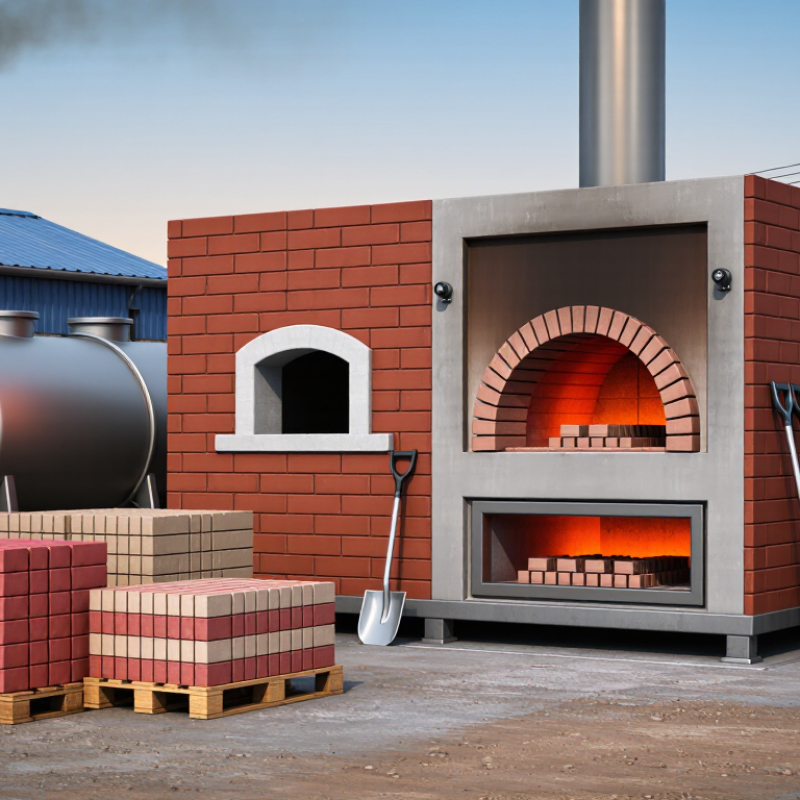
Define your brick kiln oven needs before comparing designs. Measure current clay moisture, brick size, firing temperature, and daily output. A small workshop may need 5,000 bricks per day, while a construction supplier may require continuous production. Typical clay bricks fire near 900–1,100°C, but the exact range depends on mineral content and additives. Record fuel use for every batch. Guessing here can become expensive.
Energy targets deserve equal attention. The International Energy Agency reports that industry consumes about 37% of global final energy, making kiln efficiency a practical business concern. The UNEP Global Status Report 2024 also identifies buildings and construction as responsible for roughly 32% of global energy demand. These figures do not describe brick kilns alone, but they show why heat recovery, insulation, and stable combustion matter. Ask for measured fuel consumption, temperature uniformity, loading time, and emissions performance. A beautiful specification sheet is not enough.
Tips: Write three production scenarios: normal, peak, and low demand. Check whether the kiln handles your smallest and largest brick sizes. Leave space for drying racks and safe material movement. Include maintenance time in your production plan. I would not oversize the oven too quickly. An oversized chamber may waste fuel and produce uneven firing when half loaded. That mistake is common, and sometimes unavoidable during early expansion. Track rejected bricks for one month before choosing final capacity.
Choosing a brick kiln oven in 2026 starts with the work it must do. For bread, pottery, or heat treatment, chamber size and temperature stability matter more than a flashy control panel. A wood-fired kiln can give a lively heat profile, but fuel moisture and loading habits affect results. Gas-fired models usually offer easier adjustment, while electric kilns provide precise settings and suit smaller workshops. Each choice has trade-offs.
Heating technology also shapes consistency. Direct flame heats quickly but may create hot spots; indirect heating separates combustion gases from the chamber. Insulation thickness, door seals, and thermocouple placement influence how evenly heat reaches the bricks. Ask for temperature-uniformity data and check whether replacement elements or sensors are easy to source. Specifications help, but a real firing log can reveal more.
Tips: Match the kiln’s usable chamber dimensions to your largest load, leaving room for airflow. Confirm local fuel availability and ventilation needs before buying. If possible, inspect a kiln after a full firing; look for cracked mortar, uneven discoloration, or sluggish temperature recovery. A small test load is wise. It may expose a problem your checklist missed.
| Kiln type | Operating mode | Common fuel options | Heating technology | Typical firing range | Main advantages | Considerations and suitable use |
|---|---|---|---|---|---|---|
| Tunnel kiln | Continuous; bricks travel on kiln cars through preheating, firing, and cooling zones. | Natural gas, LPG, fuel oil, or solid fuels where the kiln and burners are designed for them. | Zone-controlled burners; often uses heat recovery to preheat combustion air or dry bricks. | Commonly about 900–1,100°C for ordinary fired-clay bricks; product and clay requirements vary. | Consistent product quality, controllable firing, and efficient continuous production at high output. | High construction cost and technical complexity; best suited to large, steady production with reliable utilities and skilled operation. |
| Hoffmann kiln | Continuous; the firing zone moves through connected chambers while other chambers are loaded, preheated, or cooled. | Coal, biomass, natural gas, or other locally available fuels, depending on the design and combustion system. | Moving-fire operation with combustion air and heat passing through chambers; designs may include mechanical draft. | Typically around 900–1,100°C for common clay brick production. | Can recover heat between chambers and maintain production without heating and cooling the whole kiln at once. | Requires careful scheduling, airflow control, and trained operators; suitable for medium-to-large plants with ongoing production. |
| Bull’s trench kiln (BTK) | Continuous; bricks are stacked in a trench and the firing zone advances through the stack. | Often coal or biomass; fuel choice depends on local supply, emissions requirements, and kiln configuration. | Moving-fire combustion through the brick setting, usually with natural or assisted draft. | Often operated near 900–1,100°C, with actual brick temperature depending on setting and firing practice. | Can provide continuous output with a comparatively simple layout and lower investment than many tunnel-kiln installations. | Emissions, fuel handling, weather exposure, and temperature uniformity require attention; regulatory approval and site conditions are important. |
| Zigzag kiln | Usually continuous; the fire and hot gases follow a zigzag path through the brick setting. | Commonly coal or biomass; other fuels require compatible feeding and combustion equipment. | Controlled airflow routes combustion gases through the setting, improving mixing and heat transfer compared with a straight flow path. | Generally operated in the usual clay-brick firing range of about 900–1,100°C. | Can improve combustion and firing uniformity when properly designed and operated; may reduce fuel use relative to a poorly controlled traditional setting. | Performance depends strongly on brick stacking, draft, and operator practice; compare verified local operating data rather than assuming a fixed fuel saving. |
| Intermittent chamber kiln | Batch; a chamber is loaded, heated, held at temperature, cooled, and unloaded before the next cycle. | Natural gas, LPG, fuel oil, coal, or biomass, subject to burner or grate design. | Direct-fired burners or grates; temperature control ranges from manual to automated, depending on equipment. | Often about 900–1,100°C for ordinary bricks; specialized clay products may require different schedules. | Flexible for different products, smaller batches, and production schedules that vary. | Each cycle includes heating and cooling the chamber, so fuel use per unit can be higher than in a well-run continuous kiln; useful for smaller output or varied products. |
| Clamp kiln | Intermittent; green bricks and fuel are stacked together and fired in a temporary or simple structure. | Typically solid fuels such as coal, biomass, or agricultural residues, depending on local practice. | Combustion occurs within or beneath the brick stack; temperature and airflow are comparatively difficult to regulate. | Firing conditions vary considerably across the stack; the target is commonly within the broad range used for fired-clay bricks. | Low equipment cost and simple construction; may be practical for small, local operations where permitted. | Less uniform quality and limited process control; fuel efficiency, emissions, and worker exposure can be concerns. Check local environmental and safety rules. |
Selection note: Firing temperatures are indicative ranges, not guaranteed settings. The correct schedule depends on the clay body, brick dimensions, moisture, desired properties, kiln design, and local emissions requirements. Before choosing, compare expected output, fuel availability and cost, permitted emissions, heat recovery, maintenance needs, and the experience available to operate the kiln.
Choosing the best brick kiln oven in 2026 starts with the work you actually do. A small café may need a six-tray chamber, while a production kitchen needs steady space for several loads. Measure usable chamber width, not the outside frame. I have seen buyers underestimate door clearance and loading time. That mistake becomes expensive. Capacity should match your busiest hour, with modest room for growth.
Reliable temperature control matters more than a high maximum number. Look for independent top, floor, and air sensors, plus controls that hold heat within a narrow range. Ask for logged test results, not only display claims. During testing, bake identical dough at several shelf positions. Pale edges can reveal uneven heat. Recovery time under five minutes is useful after opening, though results vary with insulation and load size.
Compare energy use per batch, not just rated power. Dense insulation, tight seals, and programmable idle settings can reduce wasted heat. Check warm-up time and standby consumption in supplier documentation. An energy meter makes comparisons more trustworthy. Still, my readings can shift with weather, voltage, and loading habits. I would repeat the test twice. Safety interlocks and service access also deserve attention; a difficult panel may turn routine maintenance into neglected maintenance.
Choosing the best brick kiln oven in 2026 starts with its materials, not its appearance. Specify dense refractory firebricks, heat-resistant mortar, and continuous insulation around the chamber. These materials reduce heat loss and limit thermal shock. A shiny exterior proves little. Ask for test data, maximum operating temperature, and documented curing instructions. I would reject vague claims.
Safety deserves serious attention. NFPA’s Home Structure Fires report found cooking equipment involved in 53% of reported home structure fires from 2017 to 2021. Choose an oven with stable doors, protected handles, reliable temperature controls, and a properly designed flue. Install carbon-monoxide detection where combustion occurs. NFPA 96 can guide commercial ventilation decisions, but local building and fire authorities still control approval. A cheap chimney can become an expensive mistake.
Maintenance should be practical. Inspect firebrick joints, roof cracks, flue deposits, and insulation every few months. Replace damaged refractory parts before moisture enters the chamber. Keep a maintenance log. It sounds excessive, but missed cracks often grow after repeated heating cycles. Installation also needs a load-bearing base, safe clearances, weather protection, and qualified electrical or gas work. My own early assumption was that thicker walls always meant better performance. Not necessarily; poor insulation placement can waste heat and complicate repairs.
Purchase price rarely shows the real cost. Calculate installation, chimney work, insulation, fuel, cleaning, repairs, and downtime. A cheaper oven may require thicker foundations or costly ventilation upgrades. In my experience, delivery access is often overlooked. A narrow doorway can turn a simple installation into a weekend of extra labor.
Regulations affect both price and location. Check local fire codes, emissions rules, ventilation requirements, and food-safety standards before requesting quotations. NFPA 96 addresses commercial cooking ventilation and fire protection, while local authorities may impose stricter conditions. The International Energy Agency reported over 600 billion dollars in global energy-efficiency investment during 2023. That makes insulation and heat retention important financial factors, not decorative features. Compare fuel consumption at the same baking temperature, not vague claims about “high efficiency.” Ask suppliers for test methods, warranty terms, spare-part availability, and technician response times.
Tips: Request three itemized quotations. Visit one operating installation. Measure heat-up time with a stopwatch. Ask for maintenance records. A supplier who avoids technical questions deserves caution. Also, verify certification documents independently. I would not choose the lowest quote automatically; however, premium pricing does not guarantee better performance. A five-year cost sheet should include realistic fuel prices, annual servicing, failed components, and possible regulatory modifications. Keep every assumption visible. That is where weak decisions become easier to correct.
Contact our Specialists