
2026 Best Insulated Wire Terminals for Global Buyers
Choosing the right Insulated Wire Terminals can affect safety, assembly speed, and long-term electrical performance. Global buyers face a crowded market in 2026. Product photos alone rarely reveal enough.
This guide examines terminals through practical purchasing experience and engineering criteria. It considers copper quality, insulation materials, crimp-barrel design, wire-range accuracy, and connection strength. A terminal should fit the conductor properly. Loose crimps can create heat, resistance, and intermittent faults. Buyers should also check strip length, operating temperature, vibration resistance, and moisture exposure. Small details matter.
Testing evidence builds confidence. Look for pull-force results, dimensional data, traceable material specifications, and consistent production records. UL, CSA, IEC, or regional certifications may support a purchase, but certification requirements vary by application and destination. Always verify current documentation with the manufacturer or an independent testing body. Samples should be crimped with the intended tool and inspected in realistic conditions. A clean workshop test is useful. It is not the whole story.
There is no universal best terminal. A low-cost option may suit a dry control cabinet but fail in a vibrating vehicle harness. An expensive product may still be unsuitable if its insulation softens under heat. Even experienced buyers can overlook compatibility between terminal geometry and tooling. That deserves honest review. This 2026 selection focuses on dependable options, clear specifications, and practical value for international procurement teams. It also highlights limitations, because reliable decisions require more than attractive claims.
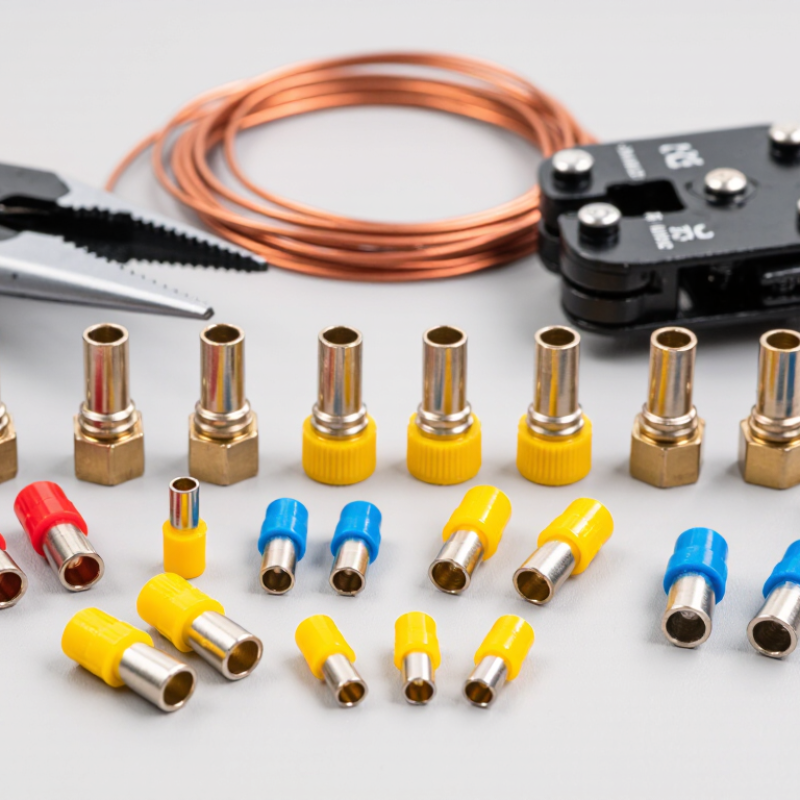
What Insulated Wire Terminals Are and How They Work
Insulated wire terminals are metal connectors covered by a protective polymer sleeve. They join a stripped conductor to equipment, another wire, or a busbar. The sleeve reduces accidental contact and helps prevent short circuits. It does not create a poor crimp into a safe connection.
During installation, the wire enters the terminal barrel. A calibrated crimping tool compresses the barrel around the strands. This forms a strong electrical and mechanical interface without solder. IEC 60352-2 emphasizes controlled crimp dimensions, conductor preparation, and pull-out testing. A loose crimp can heat under load. That failure may remain invisible for months.
Global demand for reliable connections is rising with electrification. The International Energy Agency’s Electricity 2024 report projects electricity demand growth of about 4% annually through 2026. Buyers should match terminal size with conductor cross-section, current rating, temperature range, and insulation material. Red, blue, and yellow sleeves are common, but color meanings require verification against the applicable standard. Copper usually offers good conductivity, while tin plating can improve corrosion resistance. In humid equipment, that detail matters.
Use the correct die profile. Do not crush the sleeve. Inspect the crimp visually and perform a pull test when the application is critical. A terminal can look perfect and still fail. That is the uncomfortable part. Reliable sourcing also requires traceable test reports, batch information, and clear compliance documentation.
| Terminal Type | How It Works | Common Wire-Size Range | Typical Insulation | Recommended Crimp Area | Typical Applications | Key Buying Check |
|---|---|---|---|---|---|---|
| Insulated Ring Terminal | A metal barrel is crimped onto the conductor, while the ring eye is secured under a screw or stud. The closed eye helps prevent the wire from slipping off when the fastener is loosened. | 22–16 AWG 16–14 AWG 12–10 AWG Common color-coded ranges; verify the manufacturer’s actual range. | PVC, nylon, or heat-shrink polyolefin | One crimp on the conductor barrel; use the die matched to the terminal and wire range. | Control panels, grounding connections, vehicle wiring, battery leads, and industrial equipment. | Match the stud-hole diameter, wire range, conductor material, insulation temperature, and required approval. |
| Insulated Fork / Spade Terminal | The fork-shaped tongue fits around a screw or stud, allowing installation without completely removing the fastener. | Commonly 22–10 AWG in several color-coded sizes | PVC or nylon; heat-shrink versions are also available | Crimp the metal barrel firmly around the stripped conductor without crushing the insulation. | Removable control wiring, terminal blocks, appliances, and low-voltage panels. | Check fork retention, stud size, terminal thickness, vibration exposure, and whether a ring terminal is required for safety. |
| Insulated Pin Terminal | The crimped pin forms a solid entry point for screw-clamp terminal blocks and helps prevent wire strands from spreading. | Commonly 22–10 AWG; twin-pin versions are available for two conductors | Polyamide, PVC, or other insulating sleeves depending on the design | Crimp the pin barrel with a compatible ferrule or pin-terminal crimper. | PLC wiring, circuit breakers, DIN-rail terminal blocks, and fine-stranded control cables. | Confirm pin length, pin diameter, single- or twin-wire capacity, and terminal-block compatibility. |
| Insulated Butt Splice | Two stripped wire ends are inserted from opposite sides of a metal splice barrel and crimped to create an in-line electrical connection. | Commonly 22–16 AWG, 16–14 AWG, or 12–10 AWG | PVC, nylon, or adhesive-lined heat-shrink insulation | Use the correct crimp zone for each conductor; some designs require two crimps, one on each side. | Harness repair, cable extensions, automotive wiring, appliances, and general electrical maintenance. | Choose a sealed heat-shrink type for moisture exposure and verify the splice’s wire-size range. |
| Insulated Parallel Splice | Two or more conductors enter the same splice barrel from the same side and are compressed into a common electrical path. | Varies by design; common small-wire ranges include 22–16 AWG and 16–14 AWG | PVC, nylon, or heat-shrink polyolefin | Crimp the designated barrel section while keeping all conductors fully inserted. | Branch connections, harness assembly, lighting circuits, and compact control wiring. | Confirm the number of conductors permitted, total conductor cross-section, and required pull-out strength. |
| Insulated Bullet Connector | A male bullet pin mates with a matching female socket, creating a detachable in-line connection protected by insulating sleeves. | Often used with approximately 0.5–6 mm² conductors, depending on terminal size | PVC, nylon, or heat-resistant insulating sleeves | Crimp the contact barrel to the conductor; the insulation support may receive a second crimp. | Automotive harnesses, lighting, portable equipment, and serviceable wiring assemblies. | Match male and female diameters, current demand, locking force, environmental sealing, and contact plating. |
| Insulated Quick-Disconnect Tab | A female receptacle slides onto a matching male tab, enabling fast connection and disconnection without a screw terminal. | Commonly 22–16 AWG, 16–14 AWG, and 12–10 AWG | PVC, nylon, or heat-shrink insulation | Crimp the receptacle barrel to the conductor and ensure the mating tab is fully engaged. | Appliances, automotive circuits, relays, switches, and production wiring. | Verify tab width and thickness, mating retention, current rating, vibration resistance, and wire range. |
| Heat-Shrink Insulated Terminal | The terminal is crimped mechanically, then its insulating sleeve is heated to shrink around the wire and improve strain relief and environmental protection. | Available across common ranges from approximately 22 AWG to 8 AWG and larger, depending on the design | Cross-linked polyolefin; many versions use an internal hot-melt adhesive | Complete the specified conductor crimp first, then apply controlled heat evenly around the sleeve. | Marine, outdoor, automotive, industrial, and vibration-prone installations. | Check shrink ratio, adhesive presence, sealing performance, temperature range, and heat-tool requirements. |
| Insulated Copper Lug | A heavier copper barrel is crimped onto a larger conductor and the lug eye is fastened to a busbar, stud, or equipment terminal. | Typically larger conductors, often 8 AWG and above; exact ranges vary widely | PVC, nylon, or heat-shrink insulation | Use the specified heavy-duty crimping tool or die and the required number of crimps. | Battery systems, power distribution, switchgear, inverters, and industrial control equipment. | Confirm conductor class, stud size, barrel length, current capacity, crimp geometry, and torque requirements. |
Selection note: AWG-to-metric conversions are approximate: 22 AWG ≈ 0.34 mm², 16 AWG ≈ 1.31 mm², 14 AWG ≈ 2.08 mm², 12 AWG ≈ 3.31 mm², and 10 AWG ≈ 5.26 mm². Actual ratings depend on terminal construction, conductor type, insulation system, crimp tooling, ambient temperature, and applicable testing requirements. For global procurement, confirm the product datasheet and relevant requirements such as UL 486A-486B, IEC 60352-2, or the regulations applicable to the destination market.